In a country that often prizes the new and the next, a handful of American congregations are still gathering in the same sacred spaces they occupied before the…
In a country that often prizes the new and the next, a handful of American congregations are still gathering in the same sacred spaces they occupied before the United States was even a dream. These houses of worship have survived centuries of social upheaval, brutal wars, and internal disagreements, proving that the endurance of a spiritual community often depends more on quiet persistence than on modern trends.
The sheer rarity of these institutions is staggering when looking at the broader religious environment in America today. While there are roughly 370,000 active religious congregations across the fifty states, research from the Hartford Institute for Religion Research suggests that a mere one percent of them can trace their history back to the era of the country’s founding. When the Declaration of Independence was signed in 1776, the colonies were home to just over 3,200 houses of worship. At that time, the religious identity of the burgeoning nation was surprisingly varied, dominated by Congregationalists who made up about a fifth of the total, followed closely by Presbyterians, Baptists, and Episcopalians. Even then, smaller groups like the Quakers, Mennonites, and a few Jewish synagogues were already part of the American story, though many of those early communities eventually faded away due to financial struggles or the heavy toll of the Revolutionary War.
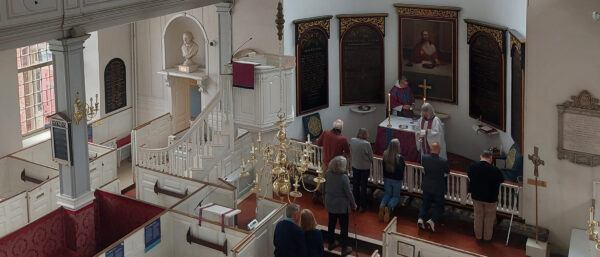
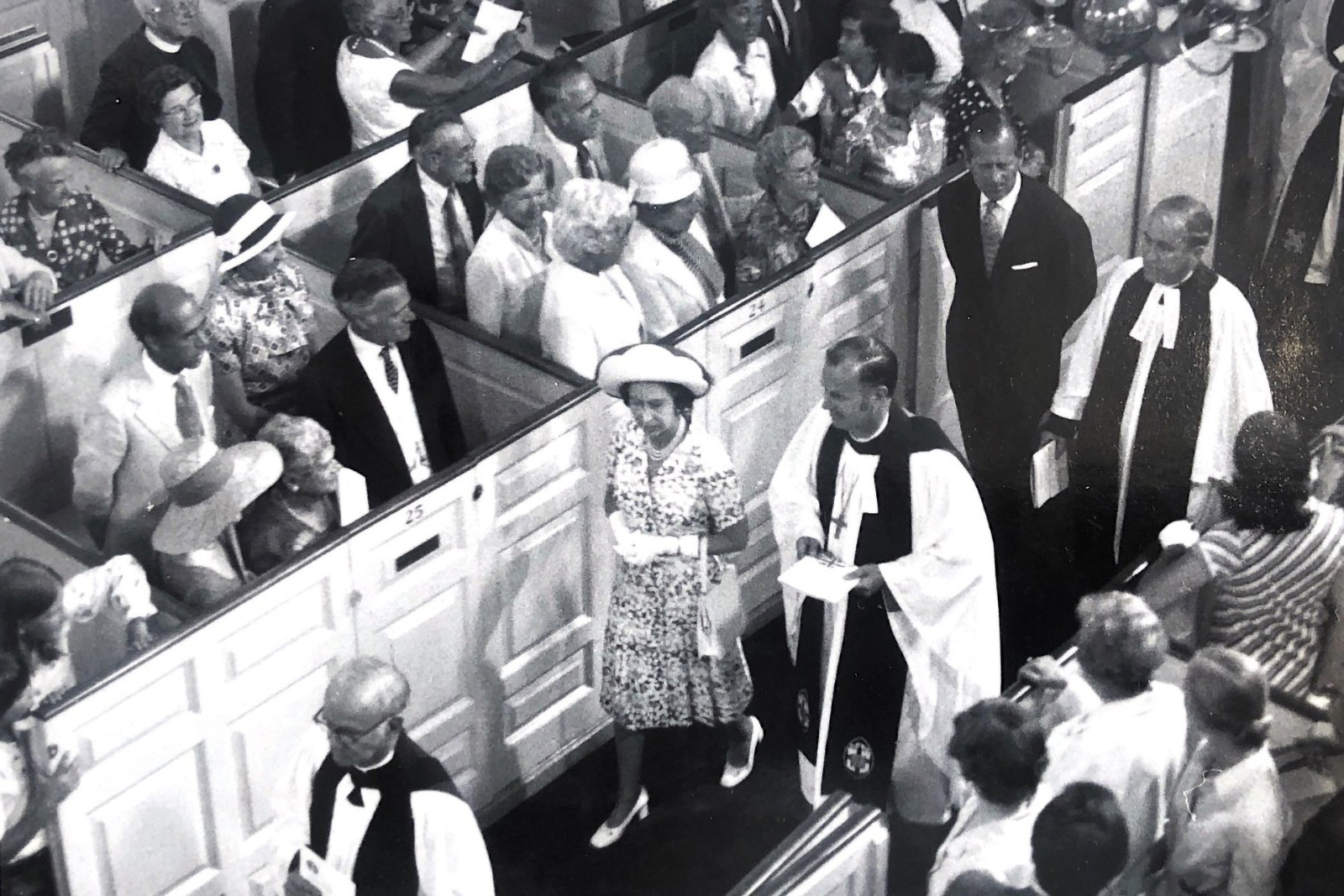
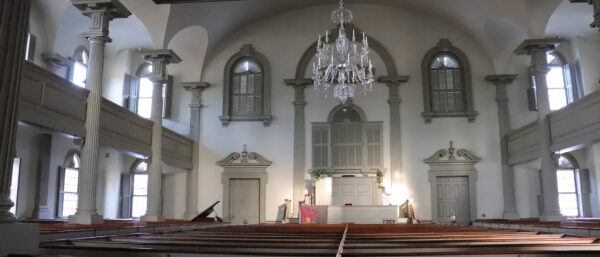
In the heart of Boston, the Old North Church stands as a primary example of this historical resilience, having opened its doors in 1723. During a recent Ash Wednesday service, the pews held a modest group of about a dozen people, a scene that stands in stark contrast to the thousands of tourists who pass through the building to see where the famous lanterns were hung to signal the British advance in 1775. The church began as a Church of England outpost in a city that was largely defined by Puritan values, making it an outsider from its very inception. Today, the congregation serves a mix of local residents and global visitors, including people from the very nation that the early patriots once fought. The current leadership emphasizes that the church’s mission is to provide a space for people to think deeply about their relationship with God in a world that is often loud and confusing.
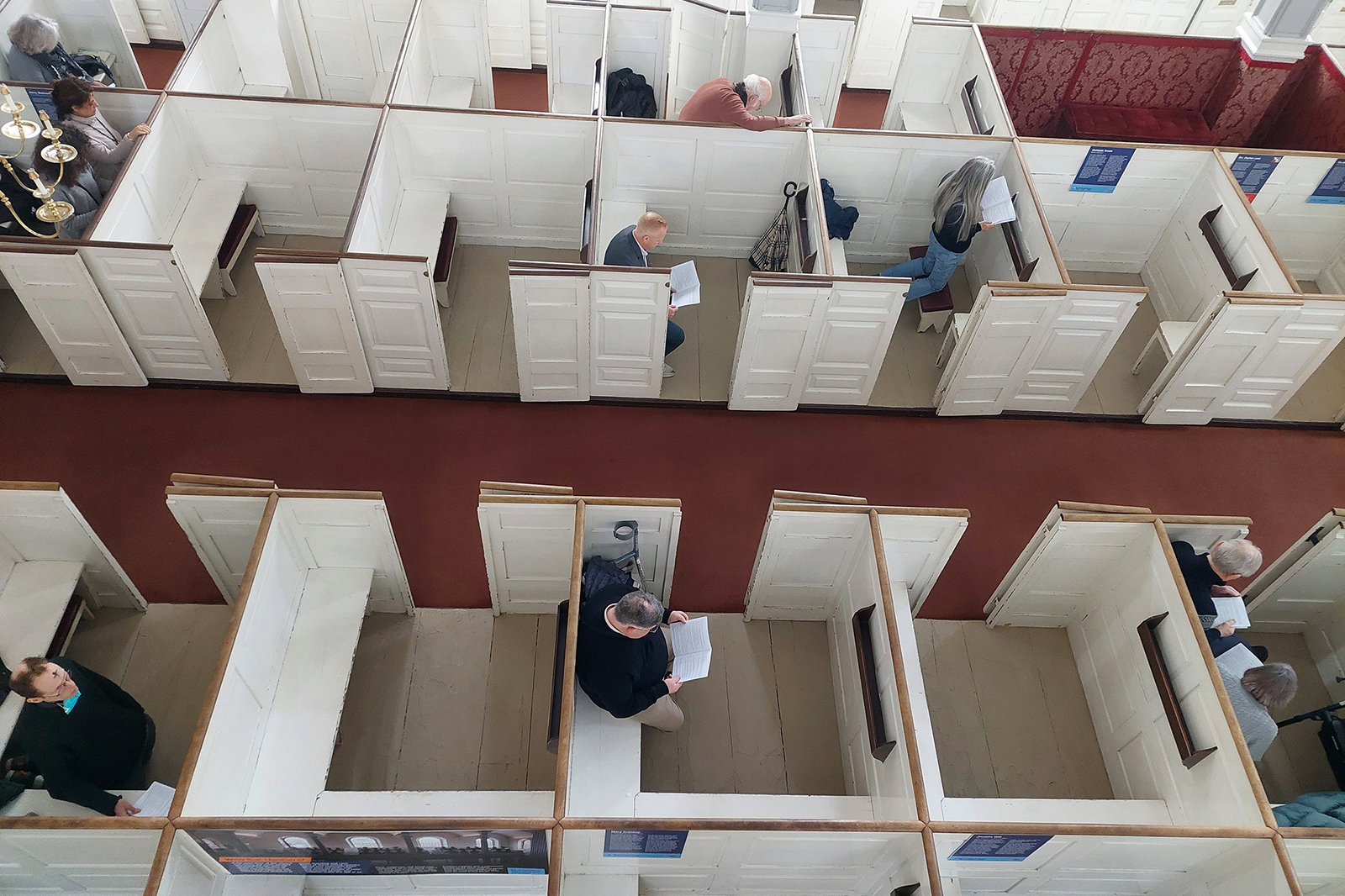
The experience of worshipping in such a place often brings a sense of connection to those who came before. Longtime attendees and new members alike find comfort in the physical history of the building, such as the high-walled box pews that have been in use for three centuries. For some, sitting where generations of believers once sat provides a unique perspective on human suffering and joy. They realize that the people who occupied those same seats during the 1700s carried similar burdens—worries about their families, hopes for the future, and the weight of personal grief. This continuity of human experience helps modern worshippers feel less isolated in their own struggles, knowing that the faith they hold has been tested by time and has remained standing through every national crisis.
History at the Old North Church is not just a static memory but a living narrative that continues to be clarified. While many know the story of the lanterns from the famous Longfellow poem, historical research now suggests the act was a collaborative effort involving not just Robert Newman, but also Capt. John Pulling Jr., a member of the church leadership and a close associate of Paul Revere. They climbed the heights of what was then the tallest structure in Boston to send their signal. This blend of civic duty and religious life has always been part of the church's identity. On a typical Sunday, the congregation is often a fifty-fifty split between dedicated members and curious tourists, creating a unique environment where the sacred rituals of the church are performed in the sight of the world.
Further south in Providence, Rhode Island, the First Baptist Church in America represents another pillar of early American faith, tracing its roots all the way back to 1638. Founded by Roger Williams after his exile from the Massachusetts Bay Colony, the church was built on the radical idea of religious liberty and the separation of civil and religious authority. Williams sought to create a space where people could follow their conscience without fear of government interference. This founding principle remains a core part of the church’s identity today. During Communion services, the leadership reminds the congregation that everyone has a direct connection to the divine, echoing the same spirit of independence and spiritual equality that defined the church during the colonial era.
The survival of these few colonial-era congregations often comes down to their ability to maintain their core identity while adapting to the world around them. While many larger or more affluent churches disappeared over the decades, places like Touro Synagogue in Newport and the various ancient Baptist and Episcopal chapels stayed the course by focusing on the basics of communal life. They did not always have full pews or massive budgets; many spent years with only a handful of faithful members keeping the lights on. Their history suggests that the longevity of a religious community is not found in "splashy" programs or massive growth spurts, but in the simple, repetitive act of gathering to pray, reflect, and care for one’s neighbors, regardless of the political or social climate outside the doors.
A Christian Perspective
The endurance of these congregations serves as a powerful physical reminder of the promise found in Matthew 16:18, where Christ declares that the gates of hell will not prevail against His Church. While buildings are made of brick and wood, and congregations are made of fallible people, the survival of these communities through three centuries of war, cultural shifts, and economic depressions points to a deeper reality. It shows that the Gospel is not a fleeting trend but a foundational truth that remains relevant across every generation. When we look at a small group of believers gathering for Ash Wednesday in a 300-year-old sanctuary, we see a living testimony to the fact that God’s Word does not return void.
There is also a profound lesson in the "cloud of witnesses" mentioned in Hebrews 12:1. Worshipping in a space that has seen centuries of prayer reminds us that we are part of a story much larger than our current moment. In an age of "cancel culture" and rapid social change, the Church provides a sense of stability that the world cannot offer. These ancient pews have held people who lived through the American Revolution, the Civil War, and two World Wars. Their persistence encourages us to keep the faith today, knowing that our current trials are temporary, but the kingdom we serve is eternal.
Finally, the history of these churches highlights the importance of the "remnant"—the small, faithful groups that keep the flame of devotion alive even when numbers are few. The fact that only one percent of founding-era churches remain teaches us that the success of a ministry isn't always measured by the size of the crowd, but by the faithfulness of the few. As these historic congregations continue to open their doors to both the faithful and the curious, they act as a bridge between the past and the future, ensuring that the message of Christ continues to echo through the halls of history until He returns.
Source: Religion News Service
Originally reported by Religion News Service.
0 Comments
Be the first to weigh in on this story.