Members of the United States Conference of Catholic Bishops are gathering this week in Orlando, Florida, to decide on the future of the Church’s primary safety protocols. On…
Members of the United States Conference of Catholic Bishops are gathering this week in Orlando, Florida, to decide on the future of the Church’s primary safety protocols. On Thursday, the bishops are scheduled to vote on a series of updates to the Charter for the Protection of Children and Young People, a document that has served as the baseline for abuse prevention since the early 2000s.
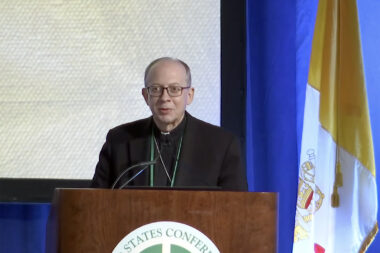
The Charter, often referred to as the Dallas Charter, was first established in 2002 during a period of intense public scrutiny and internal crisis. It was the Church’s formal response to the devastating revelations of sexual abuse of minors by clergy members. Over the last two decades, the document has undergone three separate revisions as leaders attempted to refine their approach to reporting, investigating, and preventing such tragedies. This latest proposal represents the fourth attempt to modernize these guidelines. While the intent is to ensure the safety of the most vulnerable, the specific wording of the new draft has sparked a significant debate among the clergy, particularly regarding how the Church balances the rights of the accused with the needs of those who have been harmed.
During a presentation on Wednesday, Archbishop Shawn McKnight of Kansas City expressed deep reservations about rushing the vote. He argued that the current draft might negatively affect both recognized and unrecognized victims of abuse. McKnight’s primary concern lies in the lack of recent consultation with survivors and the broader body of priests. He pointed out that many of the bishops currently serving were appointed after the last major rounds of feedback in 2022, meaning a significant portion of the voting body has not been fully involved in the development of these changes. By asking for more time, McKnight is highlighting a perceived disconnect between the committee drafting the rules and the people who must live under them or seek justice through them.
One of the most contentious points in the current discussion is whether the charter should be expanded to include the protection of adults. Bishop Barry Knestout, who leads the committee on child protection, clarified that the current revisions will continue to focus strictly on minors. He explained that the committee views adult abuse as a separate issue that falls outside the specific scope of the Dallas Charter. Instead, a different committee is tasked with creating a unique set of standards for professional behavior involving interactions with adults. This decision has met with sharp criticism from survivor advocates who argue that vulnerability does not end at age eighteen. They point to the ongoing reality of spiritual abuse and the victimization of adults in settings like confession or religious life.
Sara Larson, the leader of the advocacy group Awake, emphasized that the Church cannot afford to wait for a separate document to address the needs of adult survivors. She noted that many individuals have been traumatized twice—first by the abuse itself and then by a system that refuses to acknowledge their experiences as valid. Similarly, Terence McKiernan of BishopAccountability.org raised questions about the inclusion of new language regarding the "presumption of innocence" for accused priests. While due process is a standard legal concept, McKiernan argued that most rank-and-file priests are more interested in a document that prioritizes survivor care rather than legal protections that are already covered by canon law. He expressed concern that the bishops might be drifting away from the transparency they promised years ago.
Providing a different perspective, Father Hans Zollner, a prominent expert on abuse prevention based in Rome, suggested that the new language on due process should not be seen as a step backward. According to Zollner, fairness in the investigative process has always been a part of the charter’s foundation. He argued that providing a just process for a cleric does not inherently diminish the rights of a victim. However, he also noted that priests have a moral obligation to engage with these investigations with a spirit of honesty that goes beyond mere legal requirements. For Zollner, the effectiveness of any policy depends on the willingness of church officials to act with integrity and openness, ensuring that the legal frameworks serve the higher goal of truth and reconciliation.
Beyond the specific legalities, the debate in Orlando has touched on the internal culture of the bishops' conference. Archbishop McKnight described the current process as symptomatic of a culture that often operates behind closed doors without enough external input. This lack of transparency can lead to policies that look good on paper but fail to provide compassionate, trauma-sensitive care at the local parish level. Advocates like Larson remind the bishops that the real test of these guidelines happens in the small, painful interactions between a victim and their local diocese. If the implementation lacks empathy or fails to account for the complex nature of trauma, even the most carefully written charter will fail to provide the healing that the Church seeks to offer.
A Christian Perspective
The struggle to refine these policies reflects a deeper spiritual calling to protect the "least of these." In the Gospel of Matthew, Jesus offers a stern warning about the gravity of causing a little one to stumble, stating in Matthew 18:6 that it would be better for a person to have a large millstone hung around their neck and be drowned in the depths of the sea. This biblical mandate places a heavy responsibility on the shoulders of church leadership. It is not merely a matter of administrative policy or legal liability; it is a fundamental requirement of the faith to ensure that the house of God is a place of absolute safety and sanctuary. When the Church fails in this duty, it obscures the very character of God, who is described throughout Scripture as a protector of the vulnerable and a refuge for the oppressed.
The tension between the "presumption of innocence" and the urgency of survivor care also brings to light the Christian pursuit of both justice and truth. Scripture teaches that "the truth will set you free," yet finding that truth in the wake of systemic failure requires a level of humility and transparency that can be difficult to maintain. A truly Christian response to the abuse crisis must move beyond the minimum requirements of the law to embrace the restorative justice found in the heart of the Gospel. This involves not only holding the wrongdoer accountable and protecting the innocent but also actively seeking out those who have been cast aside and offering them a path to healing.
As the bishops move forward with their vote, the goal must remain the restoration of trust and the witness of a Church that values the soul of a single victim above its own institutional reputation. The Church's witness to the world is inextricably linked to how it handles its own internal failures. By prioritizing the voices of those who have been harmed and ensuring that every person—child or adult—is treated with the dignity they are afforded as image-bearers of God, the Church can begin to reflect the mercy and justice of Christ. This process is long and often painful, but it is necessary for the spiritual health of the entire body of believers.
Source: Religion News Service
Originally reported by Religion News Service.
0 Comments
Be the first to weigh in on this story.