Manhattan’s Fifth Avenue transformed into a sea of saffron and silk this past Saturday as over 25,000 members of the International Society of Krishna Consciousness (ISKCON) gathered to…
Manhattan’s Fifth Avenue transformed into a sea of saffron and silk this past Saturday as over 25,000 members of the International Society of Krishna Consciousness (ISKCON) gathered to celebrate the 50th anniversary of their signature "Chariot Journey." The massive procession, featuring three towering wooden structures and rhythmic chanting, coincided with a bustling weekend in the city marked by World Cup matches and local sports celebrations.
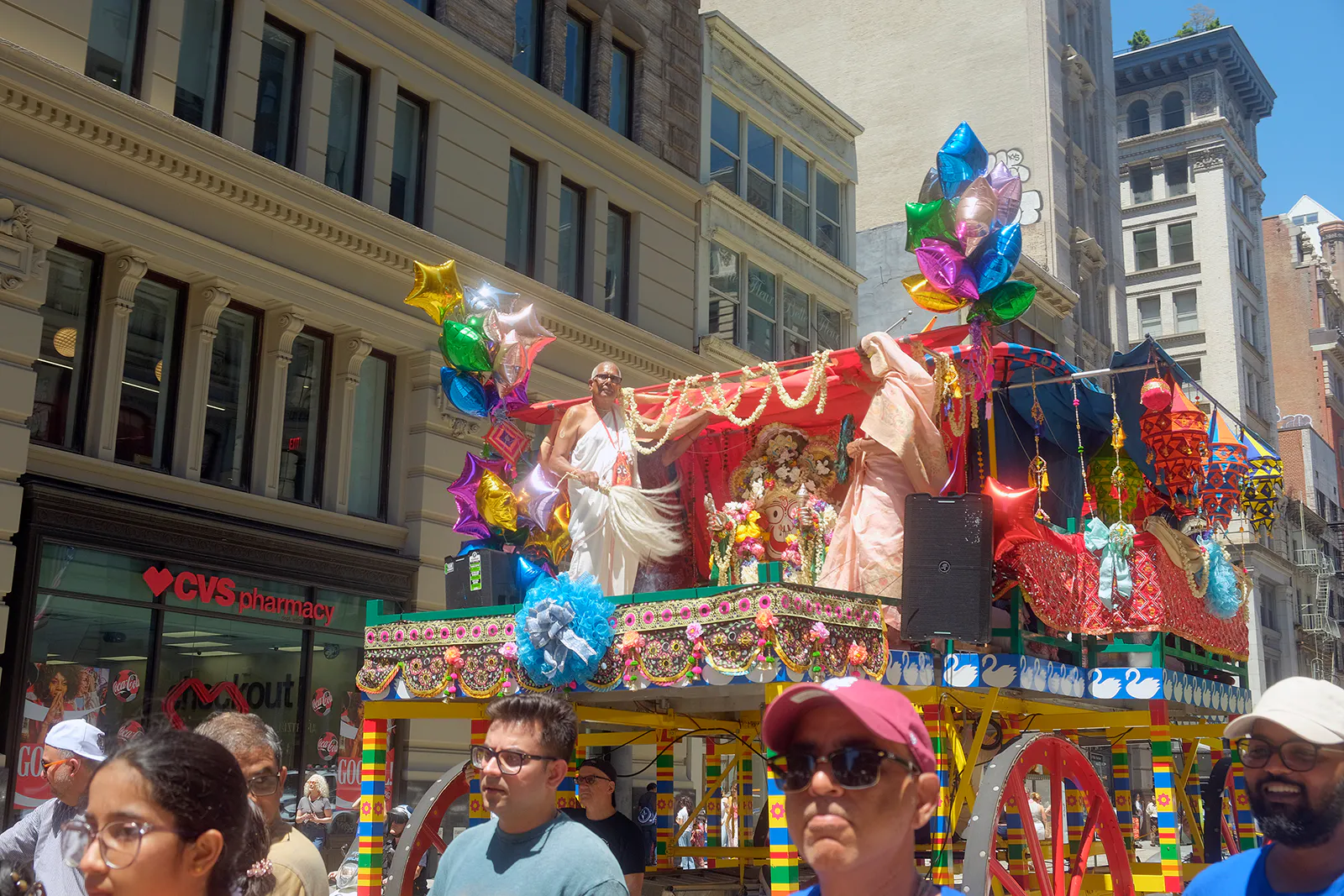
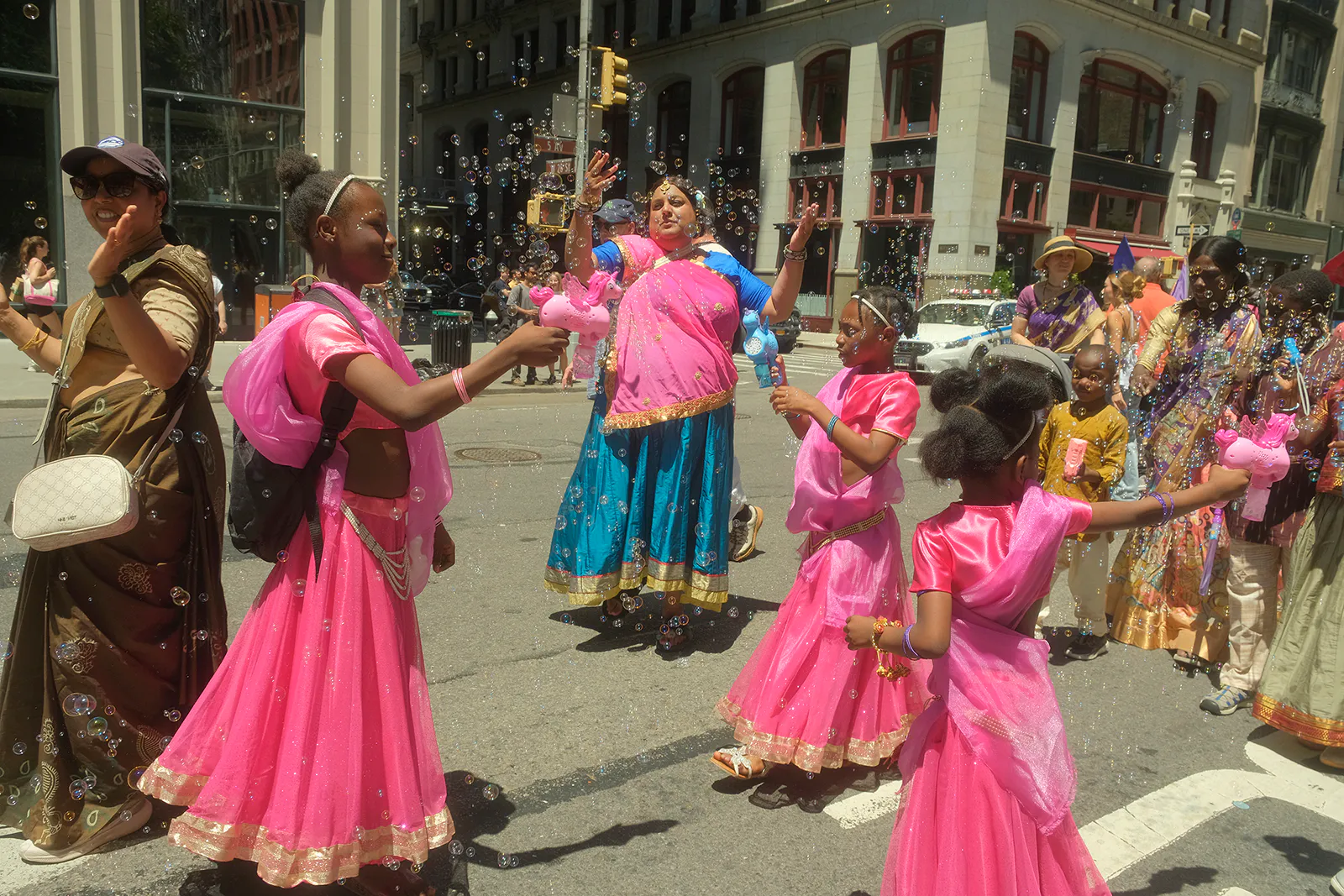
The event began around 10 a.m. as monks and volunteers prepared three massive chariots, each standing 25 feet tall. These wooden structures, adorned with bright fabrics and jewel-toned balloons, serve as mobile altars for statues representing Krishna and his siblings, Balarama and Subhadra. As a priest sounded a conch shell to signal the start, hundreds of devotees gripped thick ropes to pull the heavy vehicles down the avenue. The air was filled with the sounds of dhol drums and manjira cymbals, creating a spectacle that momentarily halted the usual flow of New York traffic. Despite the intense summer heat, participants danced and sang the "Hare Krishna" mantra for hours, drawing the eyes of thousands of onlookers who had come to the city for various other reasons.
This year’s parade carried significant historical weight, marking five decades since the movement held its first Ratha Yatra in New York City in 1976. To honor the milestone, organizers even brought one of the original chariots used in the inaugural event all the way from Florida to Manhattan. Interestingly, the movement’s ability to launch that first parade was tied to an unlikely source: Donald Trump. In the mid-1970s, the group struggled to find a space large enough to assemble their massive chariots near Fifth Avenue. The future president, then a young real estate developer, offered his land for the construction. This gesture allowed the first Manhattan Chariot Journey to move forward and become an annual fixture in the city's religious landscape.
Since its 1966 founding in New York by A.C. Bhaktivedanta Swami Prabhupada, ISKCON has evolved from a small group of counterculture devotees into a global organization with over a million followers. While the movement was once known for members living exclusively in communal ashrams, it shifted in the 1990s toward a congregational model. Today, most practitioners maintain regular jobs and family lives while attending services at temples like the one in Brooklyn, which sees about 500 regular attendees. The Ratha Yatra serves as a primary tool for public outreach. Leadership within the New York branch noted that their goal is to see a small but significant percentage of the North American population engage with their festivals and experience their "sanctified" food, viewing these public displays as a way to make their traditions known to the wider public.
The scale of the event required six months of planning and a budget of approximately $160,000, funded entirely through donations. More than 400 volunteers dedicated their time to ensure the celebration ran smoothly, with some working 24-hour shifts to prepare "prasadam," or consecrated vegetarian food, for the masses. This included massive quantities of bread, rice, and curry distributed freely to participants and curious bystanders alike. Security was also a priority, as volunteers stood guard over the chariots the night before the event to prevent any potential vandalism. This level of dedication highlights the communal nature of the faith, where service is viewed as a form of devotion to the divine.
The parade took place against a backdrop of intense athletic fervor in the city. Visitors from across the globe were in town for the Brazil versus Morocco World Cup game, while local fans were still buzzing from recent New York Knicks successes. ISKCON has leaned into this local spirit, even producing orange T-shirts that mimic the Knicks' branding. Some monks have become minor internet celebrities for chanting alongside sports fans outside Madison Square Garden. This intersection of ancient Eastern tradition and modern American sports culture was evident as tourists on double-decker buses waved to the saffron-robed chanters, and sports fans paused to accept pamphlets or take photos of the vibrant procession.
A Christian Perspective
As Christians observe the colorful display of the Ratha Yatra on the streets of Manhattan, we are reminded of the deep-seated human hunger for the divine. The sight of thousands of people pulling heavy chariots and chanting for hours is a testament to the fact that humans are, at their core, worshipping beings. This scene mirrors the experience of the Apostle Paul in Athens, recorded in Acts 17. As he walked through the city, he saw it "full of idols" and recognized that the people were "very religious." Paul did not mock their fervor; instead, he used it as a starting point to point them toward the "Unknown God" who is actually the Creator of all things and is not far from any one of us.
For the believer, such events are a call to re-examine our own witness in the public square. The Hare Krishna movement’s commitment to outreach and their desire to engage with people where they are—whether at a basketball game or on a busy street corner—should challenge the Church. We possess the "good news of great joy" that is for all people, yet we often keep it within the four walls of our buildings. While we do not share the theology of the ISKCON devotees, we can recognize that the city of New York is a modern-day Areopagus. It is a place where different worldviews collide, and it remains a mission field where the peace of Christ is desperately needed.
Finally, the physical effort required to pull these massive chariots serves as a poignant contrast to the grace offered through Jesus Christ. Many world religions emphasize the "pulling"—the human effort, the rituals, and the works required to reach or please the divine. However, the Gospel tells a different story. In Matthew 11:28-30, Jesus invites those who are weary and burdened to come to Him for rest. He famously says, "My yoke is easy and my burden is light." While we respect the discipline and devotion of those who marched on Saturday, our hope as Christians remains rooted in the finished work of Christ. He is not a deity to be pulled on a chariot by human hands; He is the Savior who carries us.
Source: Religion News Service
Originally reported by Religion News Service.
0 Comments
Be the first to weigh in on this story.