On a recent Sunday, a diverse group of American Jews gathered outside the Clay County Jail in Indiana, their voices rising in support of Salah Sarsour. Sarsour, a…
On a recent Sunday, a diverse group of American Jews gathered outside the Clay County Jail in Indiana, their voices rising in support of Salah Sarsour. Sarsour, a prominent Palestinian leader from Milwaukee and a long-term green card holder, has been held in federal custody since late March, sparking a wave of interfaith advocacy that transcends traditional political divides.
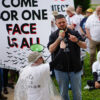
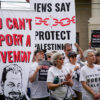
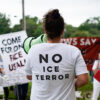
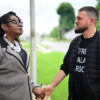
Kareem Sarsour, Salah’s son, has spent the last two months grappling with the physical and emotional distance imposed by the walls of the Indiana facility. Despite traveling long distances to the jail, he has been repeatedly blocked from visiting or even embracing his father. The rally on June 14 served as a beacon of hope for the younger Sarsour, as dozens of Jewish activists from across the Midwest arrived by car to demand his father’s freedom. These supporters, representing various organizations such as Jewish Voice for Peace, emphasize that their presence is a moral necessity. They argue that standing up for a Palestinian leader who has long advocated for his people is a rare but vital display of unity, especially during a time of heightened global tension.
The Department of Homeland Security has justified the detention by labeling Sarsour a threat to national security. According to federal officials, Sarsour’s history includes a conviction related to throwing incendiary devices at Israeli forces in the West Bank during his youth, prior to moving to the United States in 1993. The government further alleges that he provided inaccurate information on his permanent residency application decades ago. However, legal representatives for the Milwaukee leader contend that the U.S. government has been fully aware of Sarsour’s background since his initial visa approval over thirty years ago. They suggest the sudden arrest is less about old records and more about current political efforts to silence those who speak out on behalf of Palestinian rights.
During a recent legal hearing, attorneys raised alarms regarding Sarsour’s physical health and the violation of his religious liberties while in custody. Sarsour, who manages diabetes, has reportedly been denied a diet suitable for his medical condition. In a particularly distressing exchange, his lawyer noted that when he requested appropriate food, he was directed to purchase pork-based snacks from the jail commissary—an option that directly contradicts his Islamic faith. In addition to these health concerns, his legal team claims he has been denied access to a Quran and that guards have frequently disrupted his daily prayers. U.S. Representative Gwen Moore, who visited the facility, corroborated reports of inadequate medical attention, describing the situation as part of a broader, harsh approach to immigration enforcement.
Before his arrest, Sarsour was a well-known figure in the Milwaukee religious community, serving as the president of the city's largest mosque and a board member for a local Islamic school. Those who know him well, including interfaith partners, describe him as a "papa bear" figure who worked tirelessly to build connections between different faith traditions. One of his most notable contributions was his commitment to Holocaust education within the Muslim community. He frequently invited survivors to speak at the school he helped manage, ensuring that the next generation understood the history and suffering of the Jewish people. This history of cooperation is why so many Jewish neighbors feel a personal responsibility to advocate for his fair treatment and release.
The mobilization of progressive Jewish groups like Bend the Arc highlights a growing concern that national security measures are being used to curtail civil liberties. These organizations argue that the government is incorrectly linking the fight against antisemitism with the suppression of Palestinian advocacy. By targeting community leaders like Sarsour, critics say the administration is creating a climate of fear that affects all immigrant groups. Rabbi Bruce Elder of Illinois pointed out that the Jewish experience of migration and persecution makes it impossible for them to ignore the plight of others facing similar systemic challenges. To these advocates, the struggle for justice is interconnected, and protecting the rights of one group is essential for the safety of all people.
A Christian Perspective
As Christians, we are called to look upon the prisoner and the stranger with eyes of compassion, remembering that every individual bears the image of God. The reports of Mr. Sarsour being denied the basic necessities of his faith and the medical care required for his illness are deeply troubling. In the Gospel of Matthew, Jesus reminds His followers that when we care for the hungry, the thirsty, and the imprisoned, we are doing it unto Him. "I was in prison and you came to visit me," the Lord says in Matthew 25:36. This mandate does not come with a footnote regarding the prisoner's political views or religious background; it is a universal call to mercy and the upholding of human dignity within the justice system.
The concept of religious liberty is a cornerstone of a just society that Christians must defend for all people. When any individual is prevented from praying or accessing their sacred texts, it diminishes the freedom of every person of faith. We are reminded in Hebrews 13:3 to "continue to remember those in prison as if you were together with them in prison, and those who are mistreated as if you yourselves were suffering." By standing for the fair treatment of our neighbors, even those with whom we may have theological or political differences, we reflect the heart of Christ, who sought justice for the marginalized and peace for the brokenhearted. Our witness is strongest when we advocate for a system that values truth and mercy over political expediency.
Source: Religion News Service
Originally reported by Religion News Service.
0 Comments
Be the first to weigh in on this story.