On April 29, the nation's highest court issued a significant 6-3 decision, determining that a Louisiana congressional map, which included two districts with majority Black populations, constituted an…
On April 29, the nation's highest court issued a significant 6-3 decision, determining that a Louisiana congressional map, which included two districts with majority Black populations, constituted an unconstitutional racial gerrymander. This ruling is poised to have far-reaching effects, potentially leading to a reordering of the U.S. Congress and weakening the foundational principles of the 1965 Voting Rights Act. Experts suggest this decision could facilitate a substantial reduction in Black representation at both federal and state levels, reminiscent of the period following Reconstruction.
The Supreme Court's recent judgment has sparked considerable concern among civil rights advocates and historians, who view it as a critical moment for racial justice in America. Columnist Jamelle Bouie articulated fears that the ruling could precipitate the most significant decline in Black representation since the post-Civil War Reconstruction era. Historian Jemar Tisby characterized the current climate as "the Civil Rights movement of our day," urging believers to recognize the historical significance of this period and engage actively. This perspective highlights the deep historical roots of the debate surrounding voting rights and the ongoing struggle for equitable political participation.
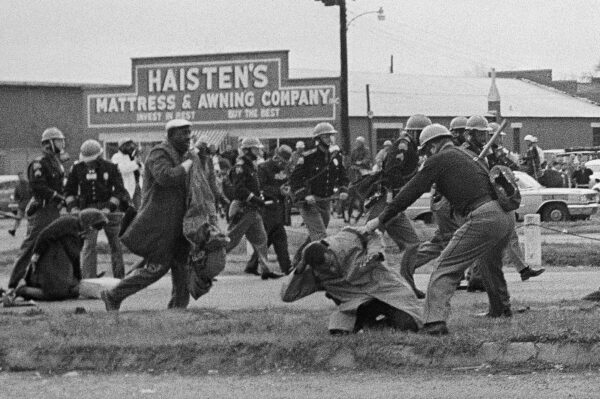
To fully grasp the contemporary implications, it's helpful to look back at the era between Reconstruction and the implementation of Jim Crow. Following the Civil War, Reconstruction (1865-1877) introduced unprecedented protections for Black citizens. However, these gains began to unravel in 1877, ushering in a "backlash" period during which the Supreme Court narrowly interpreted the 14th and 15th Amendments. These amendments, designed to safeguard Black Americans post-slavery, saw their federal enforcement powers limited, effectively allowing white Southerners to dismantle Black political involvement and civil rights. This historical precedent serves as a stark warning for many observers today, who see parallels in the current erosion of civil rights advancements.
Historically, religious leaders played a pivotal role in the passage of landmark civil rights legislation in the mid-1960s. Their involvement was instrumental in building consensus and securing the necessary votes for both the 1964 Civil Rights Act and the 1965 Voting Rights Act. Notably, these faith-based groups possessed unique connections with Republican lawmakers that other advocacy organizations, such as labor unions, did not. This period marked a zenith for religious influence on national legislative efforts, demonstrating the potent impact of a unified moral voice in shaping the nation's laws and promoting justice.
These historical commitments to civil rights continue to resonate within faith communities today. In the immediate aftermath of the Supreme Court's ruling, various religious bodies expressed their concerns. For instance, the United Methodist Church's General Board of Church and Society, alongside the General Commission on Religion and Race, issued a joint statement. They warned that after decades of protected equitable representation, the decision now exposes Black, Brown, and Indigenous communities to renewed disenfranchisement. Their statement affirmed the Voting Rights Act as a testament to the courage of those who marched, prayed, and organized for a more just society, emphasizing the potential loss of vital voices in a fair democracy.
The political dynamics surrounding minority-majority districts have evolved considerably over time. The 1965 Voting Rights Act was later amended in 1982 to prohibit electoral practices that dilute minority voting strength. A 1986 Supreme Court decision, Thornburg v. Gingles, further clarified that dispersing Black voters or concentrating them excessively could illegally diminish their electoral power. This led the Reagan Justice Department to mandate the creation of minority-majority districts in states where voter dilution was a concern. Interestingly, figures like Republican Congressman Newt Gingrich recognized that by "packing" people of color into specific districts, other Southern districts would become more likely to elect Republicans, as white voters increasingly aligned with the GOP. This strategy contributed to a significant increase in both Black congressional representation and Republican House majorities in the 1990s.
Yet, what was once a politically advantageous strategy for some is now being reconsidered, with current efforts to undo the very system that benefited the Republican party decades ago. Southern states, following the Supreme Court's recent decision, are swiftly moving to redraw congressional lines. The anticipated outcome is a reduction in the number of representatives from communities of color. This shift carries considerable risks, potentially altering the landscape of political representation and deepening concerns about equitable participation for all citizens in the democratic process, raising questions about the long-term impact on national unity and diverse governance.
A Christian Perspective
The Supreme Court's decision on congressional maps, and the ensuing discussions about voting rights, call for profound reflection from a Christian worldview. Our faith teaches us that every individual is created in God's image, endowed with inherent dignity and worth. This divine truth compels us to advocate for systems that honor and protect the voice and participation of all people, especially those historically marginalized. When the avenues for equitable representation are narrowed, it challenges the very fabric of a just society, and by extension, our Christian commitment to see justice roll down like waters (Amos 5:24) and righteousness like an ever-flowing stream. We are reminded that God's heart is always for the oppressed and the vulnerable.
The historical engagement of religious leaders in the Civil Rights movement, including the fight for the Voting Rights Act, offers a powerful testament to the Church's prophetic role. They understood that faith is not merely a private affair but a public witness to God's kingdom values of justice, mercy, and humility (Micah 6:8). As Christians today, we are called to discern how we might continue this legacy, whether through prayer, advocacy, or encouraging informed civic participation. Our unity in Christ transcends racial and political divides, urging us to seek the common good and ensure that the voices of all our neighbors are heard and valued in the public square.
In moments of societal challenge, the Church is uniquely positioned to offer both lament and hope. While we may lament decisions that appear to diminish the progress towards a more inclusive democracy, our hope rests in God's ultimate sovereignty and His ongoing work in the world. This hope is not passive; it inspires active love and persistent prayer for wisdom for our leaders and for justice to prevail. We are called to stand firm in our faith, demonstrating courage and compassion, and to be a living testament to the transformative power of the Gospel, which seeks to reconcile, heal, and uplift every member of the human family.
Source: Religion News Service
Originally reported by Religion News Service.
0 Comments
Be the first to weigh in on this story.